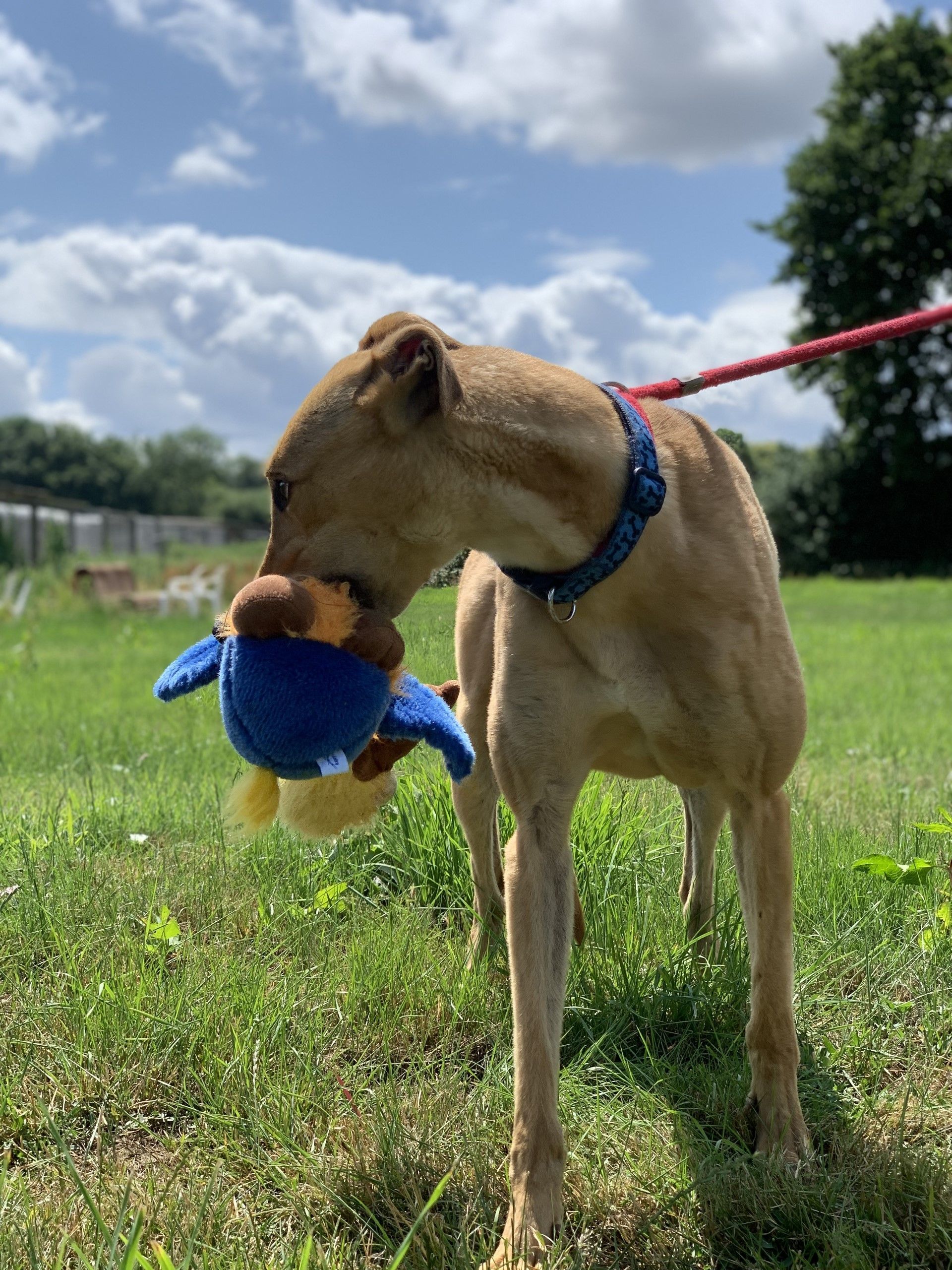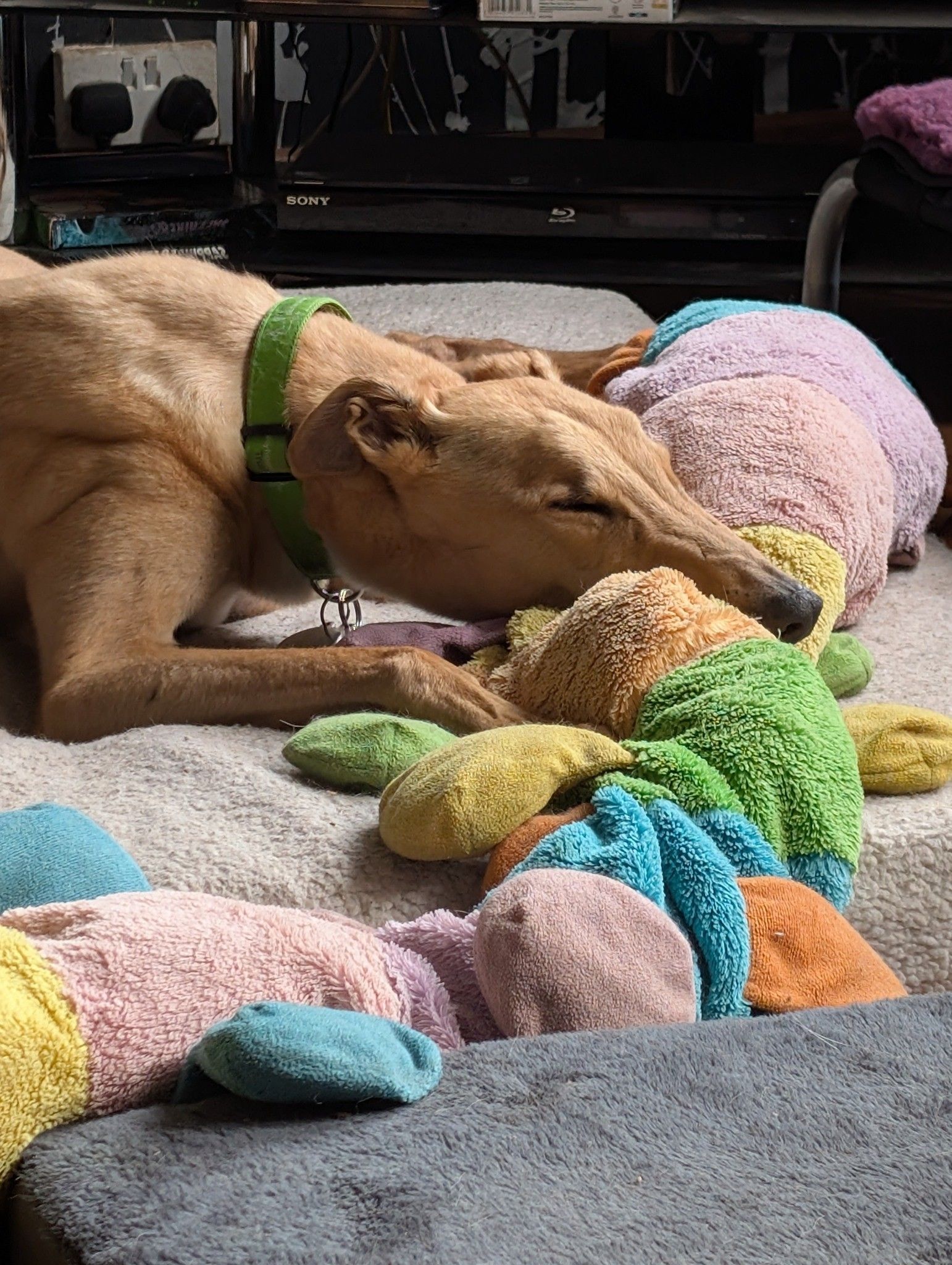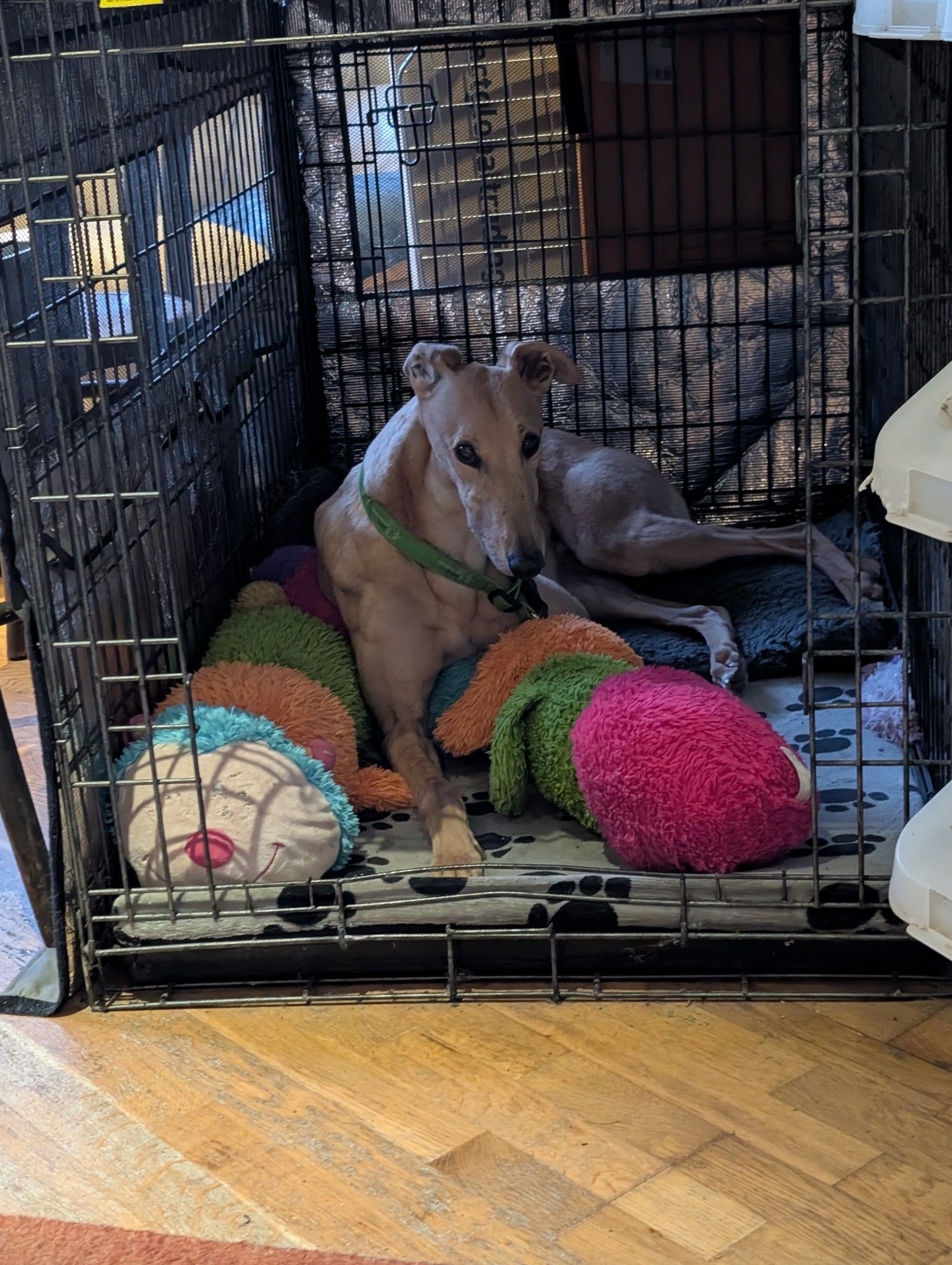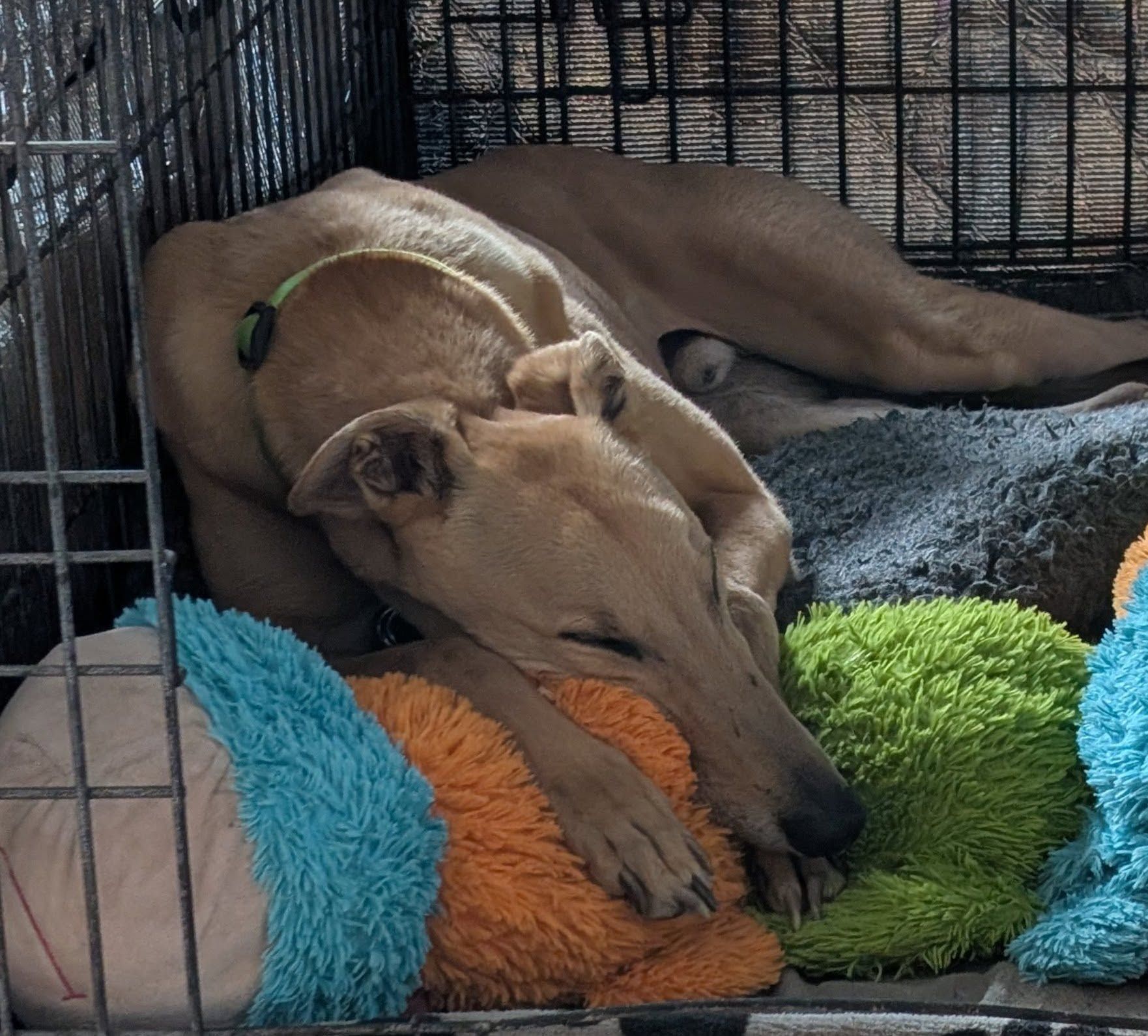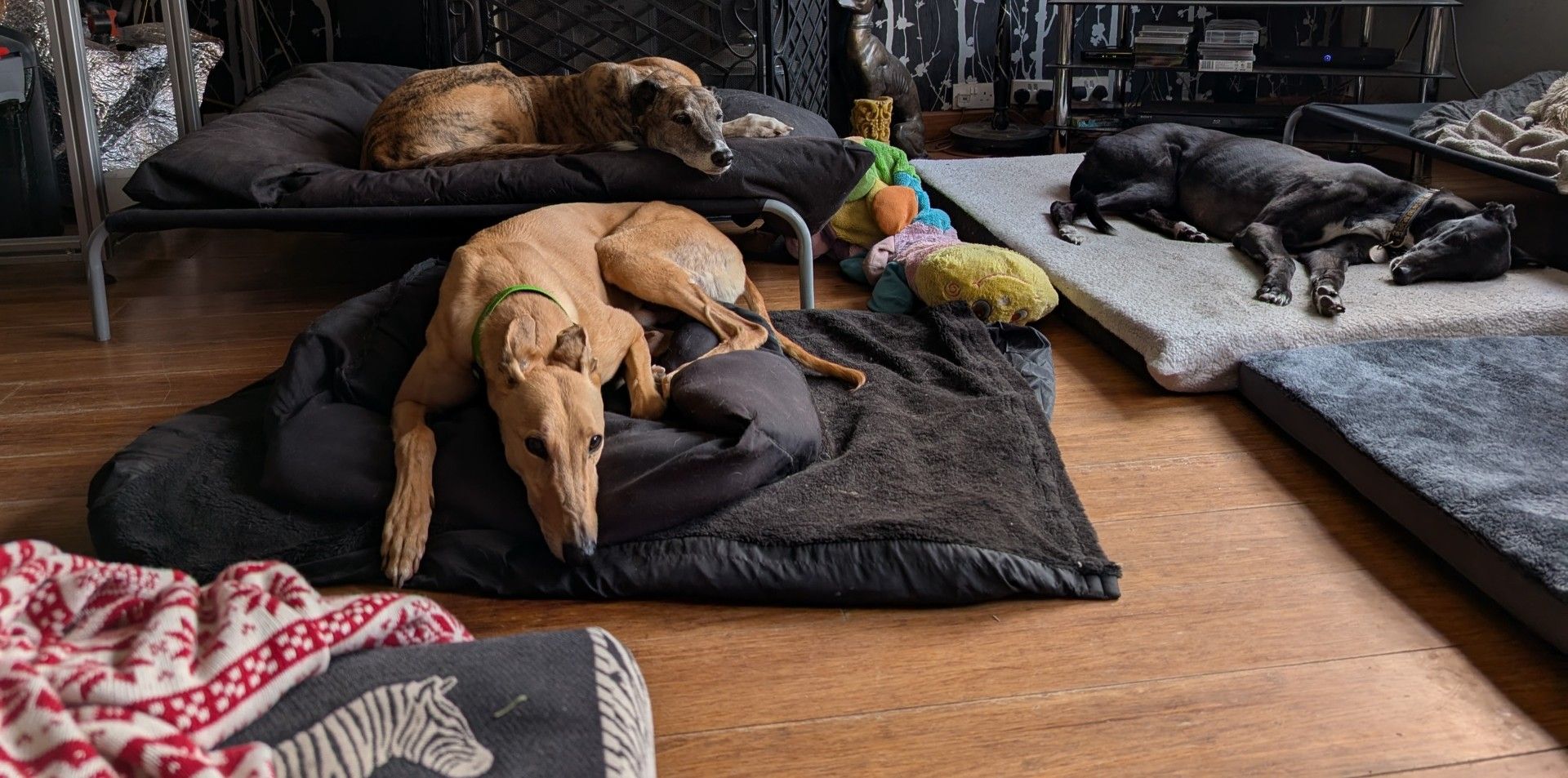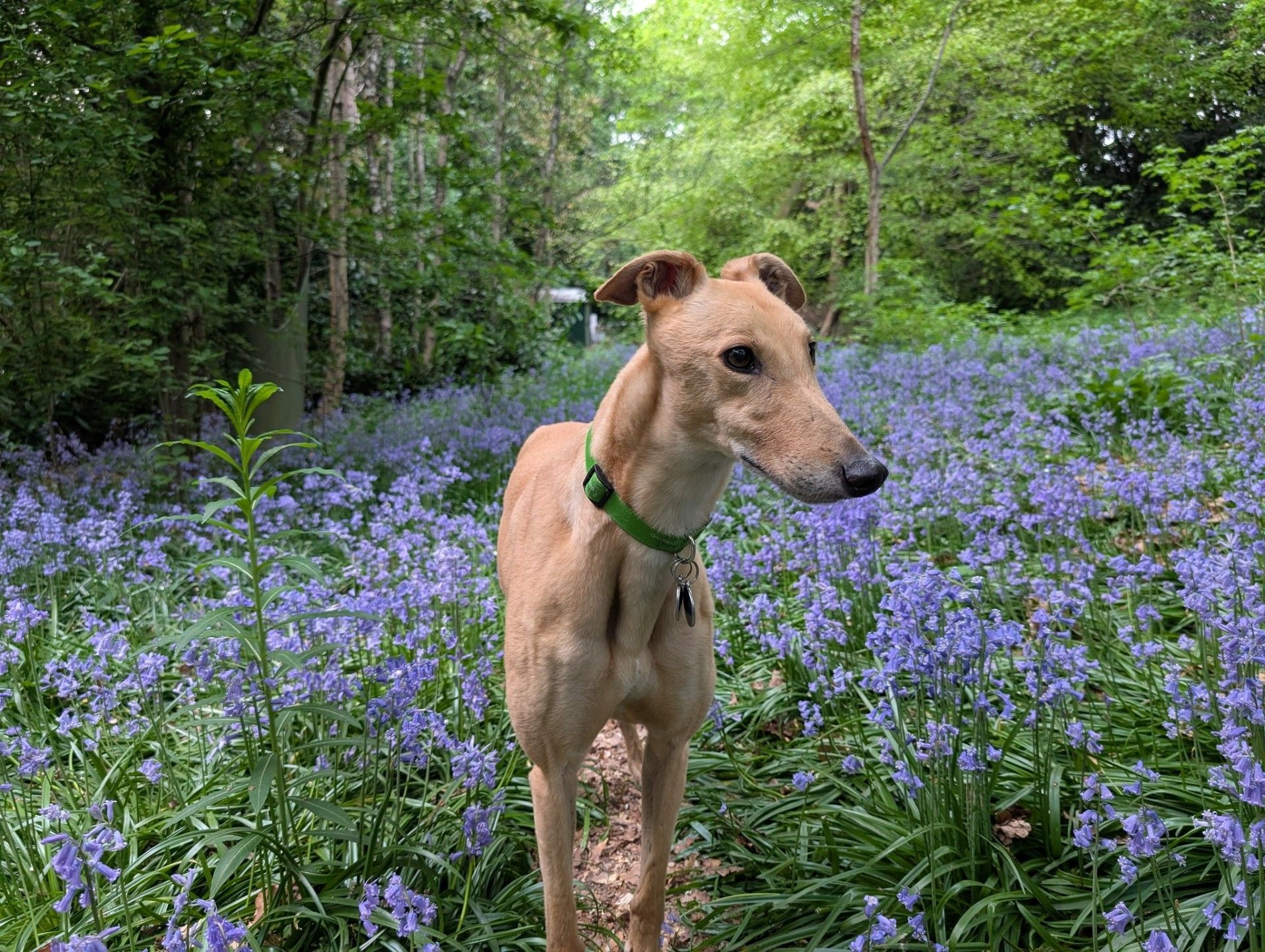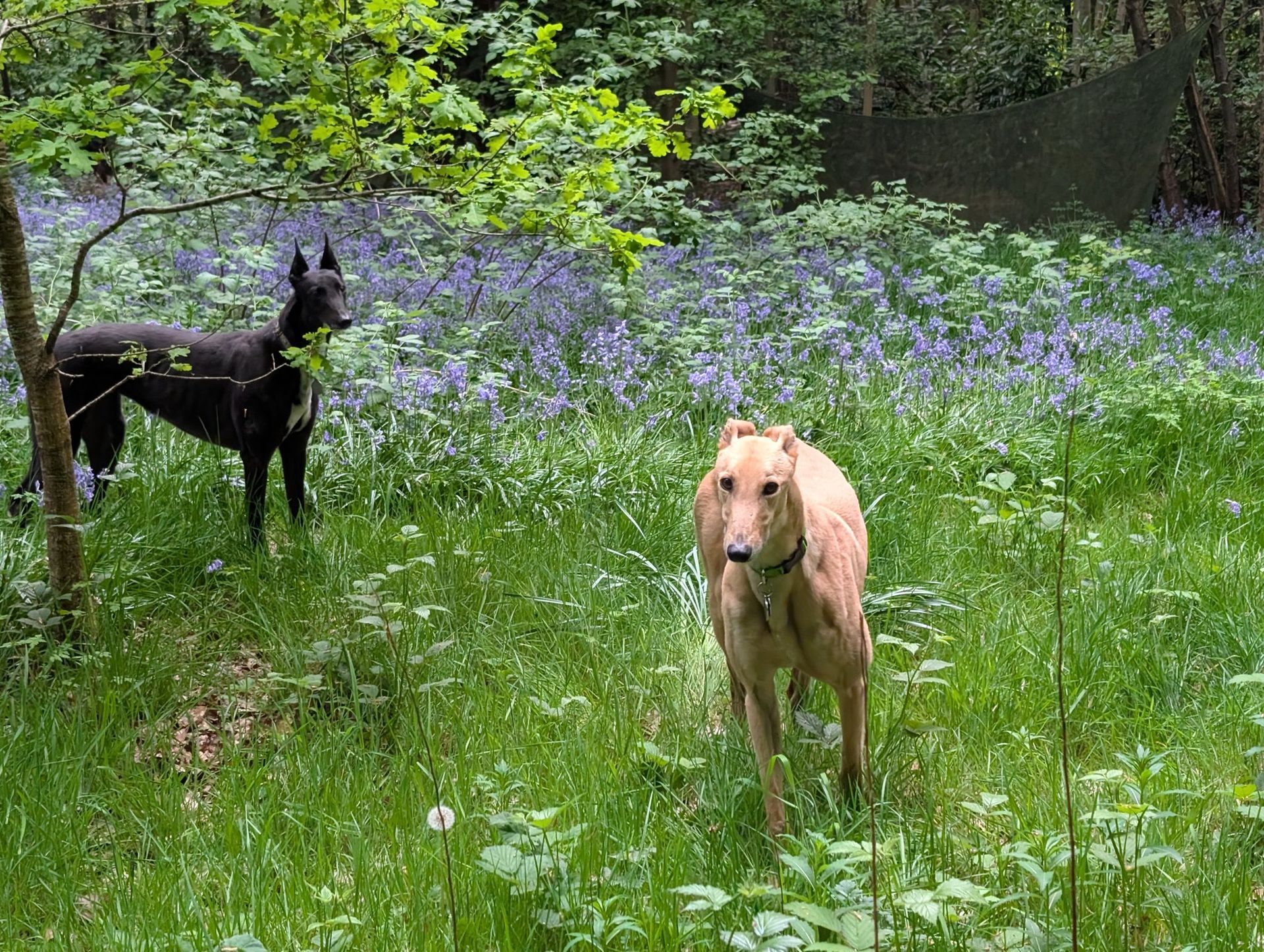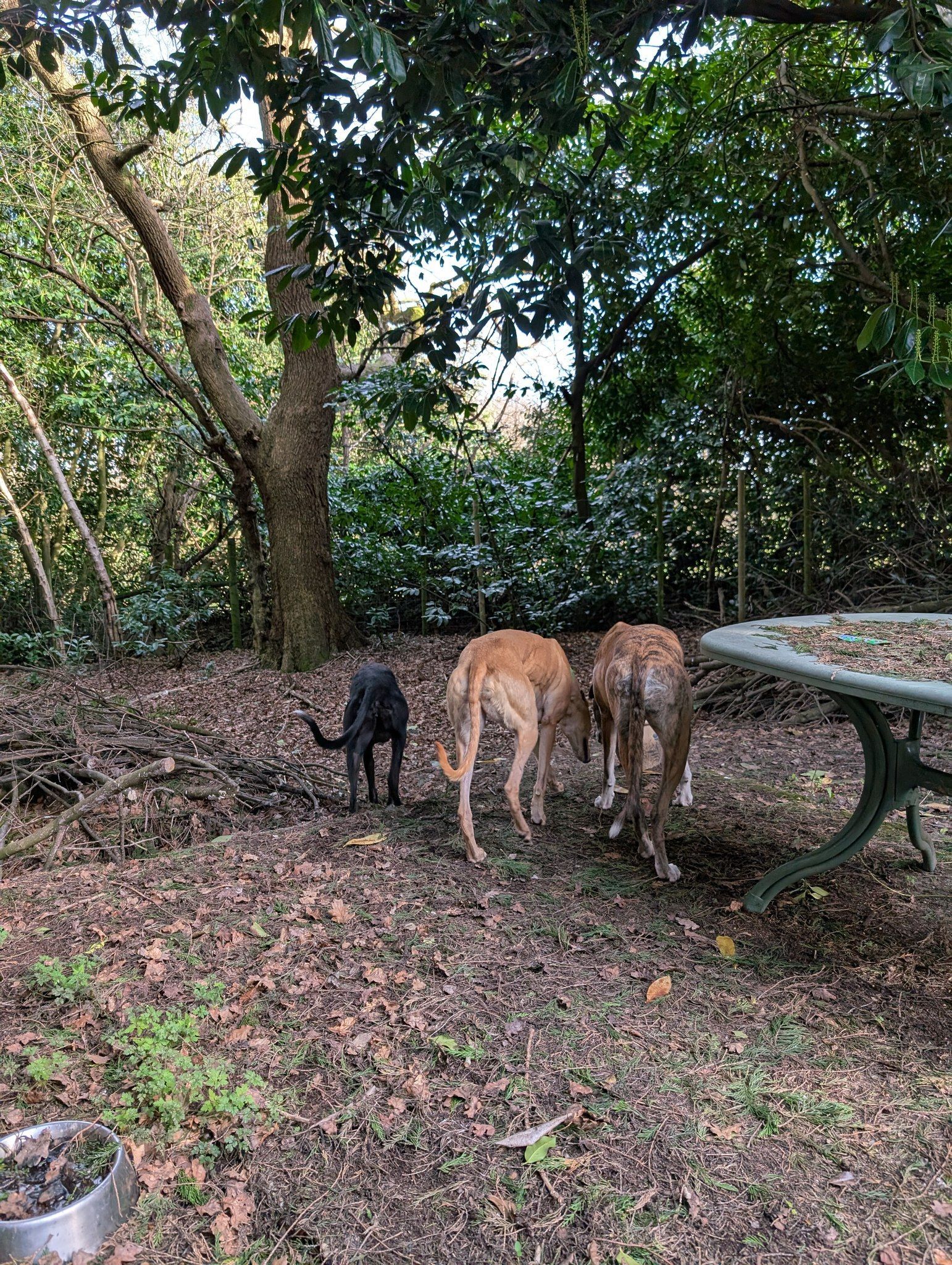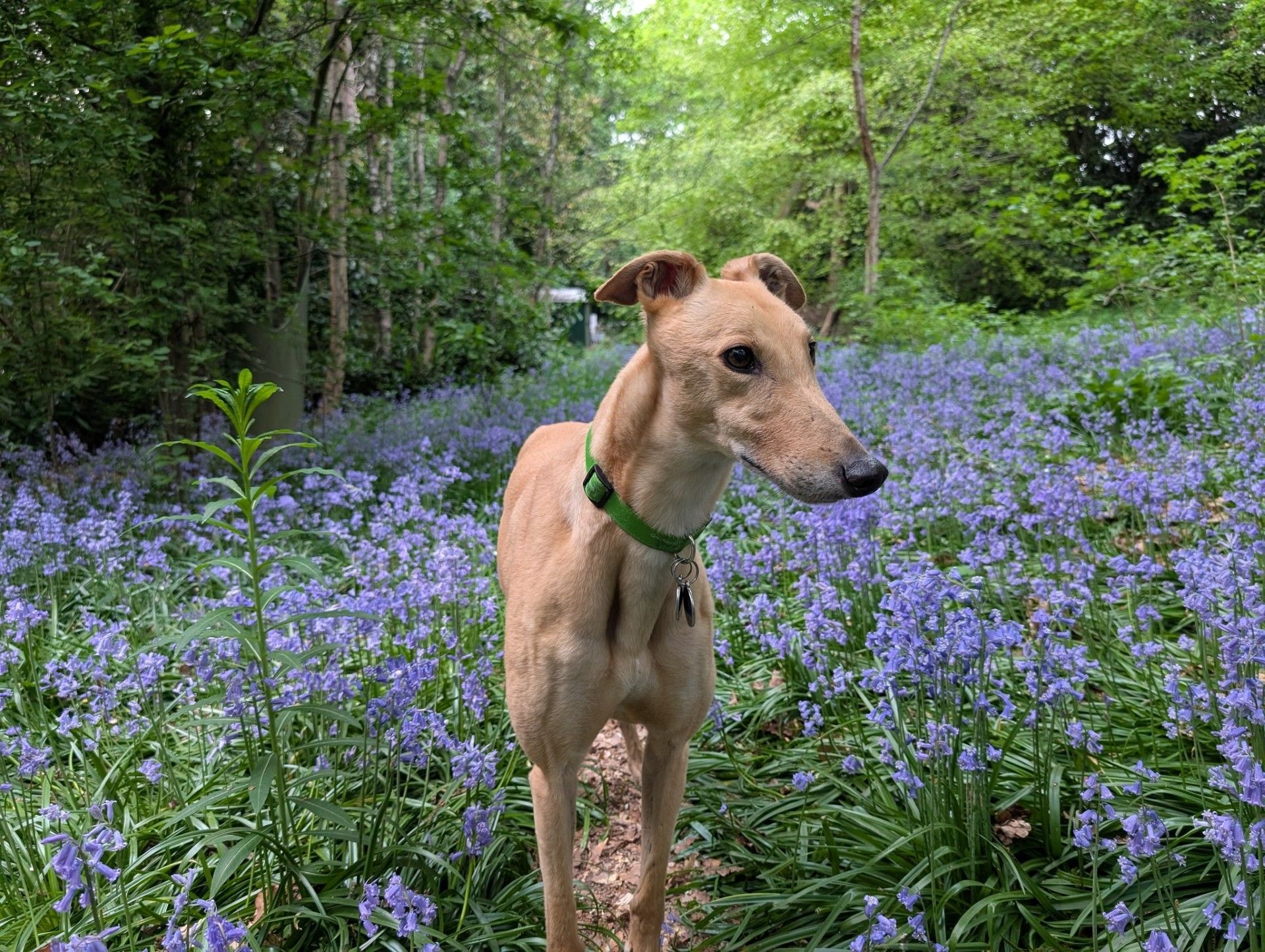


Dizzy
Kennel 20
Kennel 20 - Sponsored In memory of our outstanding and deeply missed dog Kane (General Kane)
Pet name - Dizzy
Race name - ABSOLUTE DIZZY
Colour - Fawn
Sex - Male
Born - 1st May 2019
Arrival date - 1st June 2023
January 2026
Dizzy is one of our long stay dogs having been back with us now for 587 days and counting. Dizzy originally came to us when he was 4 years old and will be turning 7 years old in May. He was with us around a year before he found a home. Alas that home only lasted a week due to Dizzy’s oddities.
In early 2025 he spent some time in foster care to see how he would cope if he had other greyhounds in the home. Dizzy has been back from his foster home for some time now. I’ve honestly been struggling with how best to pass on the information that has been passed on by his foster carers. Dizzy’s peculiarities make it a challenge to showcase his character and to highlight the daily trials Dizzy will face when in a home environment. What also makes it difficult is that Dizzy can tend to fixate on one person and can become inconsolable, fretting, stressing and vocalising if he can’t get to that person. Once that person is no longer around, he calms himself down, but if he knows they are near he wants to be close.
Things we have learnt from Dizzy’s time in foster:
• He needs to live with 1 or 2 female greyhounds. He doesn’t necessarily pay them any attention but needs the support of them being in the home and on walks.
• He is not a strict timekeeper. If mealtimes/getting up/bedtime are within an hour window of his normal time he doesn’t fret too much.
• House Training – good for the most part. Other than first morning wees he needs someone with him in the garden when he goes out to toilet. If something spooks him whilst out, he won’t toilet and needs time to calm down before trying again.
• Prone to weeing when he gets stressed – Fosters did their best to keep his stress levels low to minimise incidences.
• Usually did well on walks if he was walking with at least 1 of the greyhound girls. Was OK with walks if it was the same walk. Walking in new places really unsettles him especially if they are busy or something spooks him.
• Learned how to do stairs quite quickly.
• Mostly sleeps well but is an early riser and sleeps better if allowed to sleep in the same room as the humans.
• Showed no interest in toys but fosters were careful as they have 2 other dogs and Dizzy was new to the home.
• Food – No guarding issues but still fed away from other dogs. Had been eating 2 meals well. Suspicious of treats but accepting of them once he knows they’re nice ones.
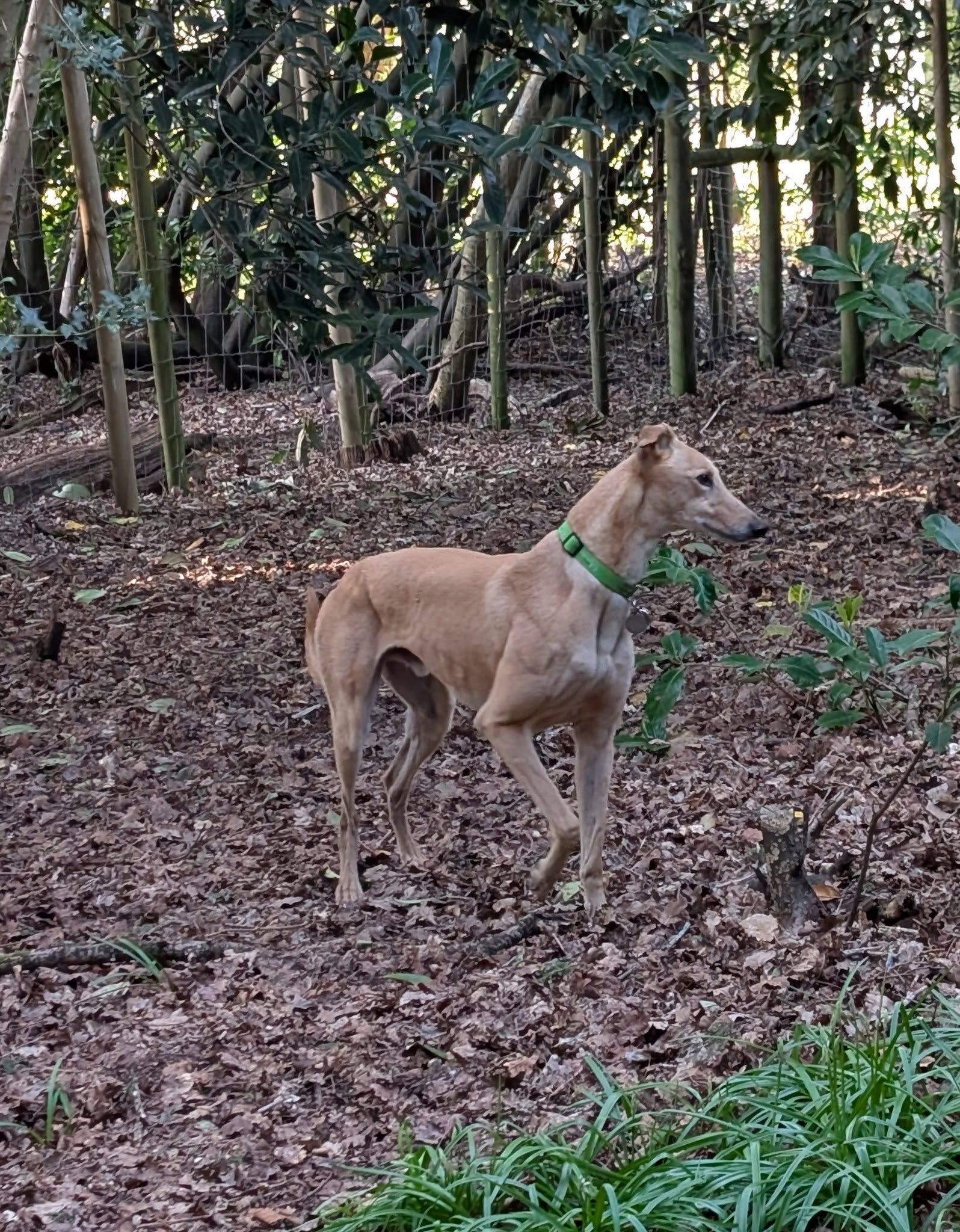
• Garden – Foster’s had a securely fenced woodland type garden allowing for quieter areas outside. Loves the garden when its quiet and enjoys all the wildlife smells. Was used to going out multiple times a day accompanied by female foster carer. If he’s off lead in the garden and it is too scary, he won’t wee. Foster carer would put him on a lead and walk him down to a safer area so he could toilet before guiding him back inside.
• Separation issues - generally needs someone around nearly all the time. Can cope with fosters being in another area of the house but will go in search of them after a short time. When fosters have had to leave him, he takes himself either to his crate or to the office where male fosterer works. Office is safe and quiet with predictable noises. He does fret, wander and stress for 45mins-ish first but has managed to be left on occasions for 3 hours and has only wee’d inside if he’s not emptied his bladder before they’ve gone out.
• Mostly ignores other dogs on walks as he’s more concerned about where they are going on walks to initiate with other dogs.
• Okay with people if they are not too loud or going past on a bike
His foster carers found that noise** is Dizzy’s main problem. Everywhere is fine IF it is quiet and predictable. Sound of children, dogs barking, planes, garden machinery, will all put him off toileting in the garden. He can’t tolerate dramatic scary music – don’t blame him for that one! However, generally fine with the TV, Radio, doorbell and car alarms.
As we know from his time with us in the kennel and from his foster carers, Dizzy is a dog who struggles to relax. He only really whines once settled if he is worried or if its time for something. He initially barked at unfamiliar noises in the home, but this behaviour soon settled down. Dizzy likes routine and structure. Small changes and quiet noises he can adjust to quite well once he realises, they are not a problem. However, once he’s in-flight mode it takes him a while to calm down and he may do a stress wee. He’s not generally a cuddly dog but does like affection on his terms and does like to be close. Other than an initial couple of spats, the 2 greyhound girls he stayed with were ignored. The most attention he paid to them was following them into the garden of a morning, but he still needs to know they are there in the home or garden for confidence and reassurance. They found that he was more likely to go into fear mode when the male fosterer moved and made noises but on the other side of it finds comfort and safety in the male foster’s office and if he stays in his chair can make as much noise as he wants.
So that’s our Dizzy. He is a dog you just have to experience and be prepared to just take each day and each challenge as they come. He’s a dog with complex needs but mostly needs quiet, predictable routines with slow changes and someone around for most of the day. In the right circumstances and with an awful lot of patience and sensitivity he will thrive in a home.
**Due to Dizzy’s noise phobia any potential adopter may be subject to a physical home visit as well as our virtual home visit and other pre-adoption checks.
May - 2024
Dizzy has spent a few days in a home environment. Unfortunately he found the experience very overwhelming. Dizzy would be best suited to a home with a retired couple who don't have the added pressure of working from home or working away from home. He will take time to settle into a home environment and is going to need a lot of patience and understanding to get him through those initial first few weeks. He has an anxious temperament which means any sort of change is difficult for him but he can overcome it with time and patience. Once back in the familiar kennel environment he calmed immediately and after a snooze settled straight back into the kennel routine. He may find it easier in a home to be restricted to one room with a strict but calm daily routine. For some dogs too much access to space is overwhelming. When he arrived at the kennels in June 2023 after an initial stressy first couple of weeks he settled down. We believe that Dizzy would benefit from being in a home environment but it is going to take a special someone to help him get through those first few weeks. He doesn't care about having another dog around, what he needs is his person/s who can ease him into homelife.
We realise that this may be a tall order to fill to find him a home. However, once settled in a home we feel he will be happier than in kennels.
December - 2023
Dizzy is as unique as each snowflake that falls in winter. There’s not really an easy way to describe him. He’s not keen on going for walks, he’s not fond of being out in the fields for more than a minute or two. He want’s a kennel mate but at the same time ignores them or gets a bit grumpy with them in his space. He is vocal and dramatic at mealtimes as well as when he’s been out the field too long (in his opinion). In a lot of ways Dizzy acts like a much younger more inexperienced dog. Despite him being a bit Meh about having a kennel mate, we think in a home environment he would benefit from having a stable and established Greyhound girl to guide him. This would hopefully make walks and outside time more enjoyable for him. Currently walk times are short as he is spooked by a lot of things even though we are semi-rural.
He does have an excellent pathetic face and is usually found sitting down leaning in the front corner of his kennel. His propensity to look hard done by wins him a lot of fuss and affectionate from visitors to the kennels. He is an affectionate dog and does seem to like human company and would prefer someone around most of the time, or at least until he has settled and is happier in his new environment.
The ideal home for Dizzy would probably be either a couple who are retired or a home with a couple of children with parent/s who work from home. This way he gets the human companionship that he likes whilst working with him on being left for short periods of time.
Dizzy cannot live with cats or other breeds of dog.
June - 2023
Although Dizzy is 4 he acts like a younger dog. Dizzy was born, raised and raced from the same kennel. Moving to a different kennel to find his forever home has been a bit of a challenge for him. Although a bit stressed with the change in environment, Dizzy picked up the kennel routine quickly and is starting to enjoy mealtimes now that he is used to the different food. Dizzy still hasn't quite worked out what treats are. He currently like smackos (or similar meaty strips) but only if they are broken into small pieces!